Capabilities
- Vision & Strategy
- Creative Direction
- Content Strategy
- UX & Product Design
- Team Leadership
- User Research
- Journey Mapping
- Partner Collaboration
Eighteen million people had already trusted Ancestry with their DNA. AncestryHealth was where that trust was always heading.
Ancestry had spent nearly a decade building one of the most sophisticated consumer DNA networks in the world, for family history research. Turning that science toward consumer health was a different challenge entirely.
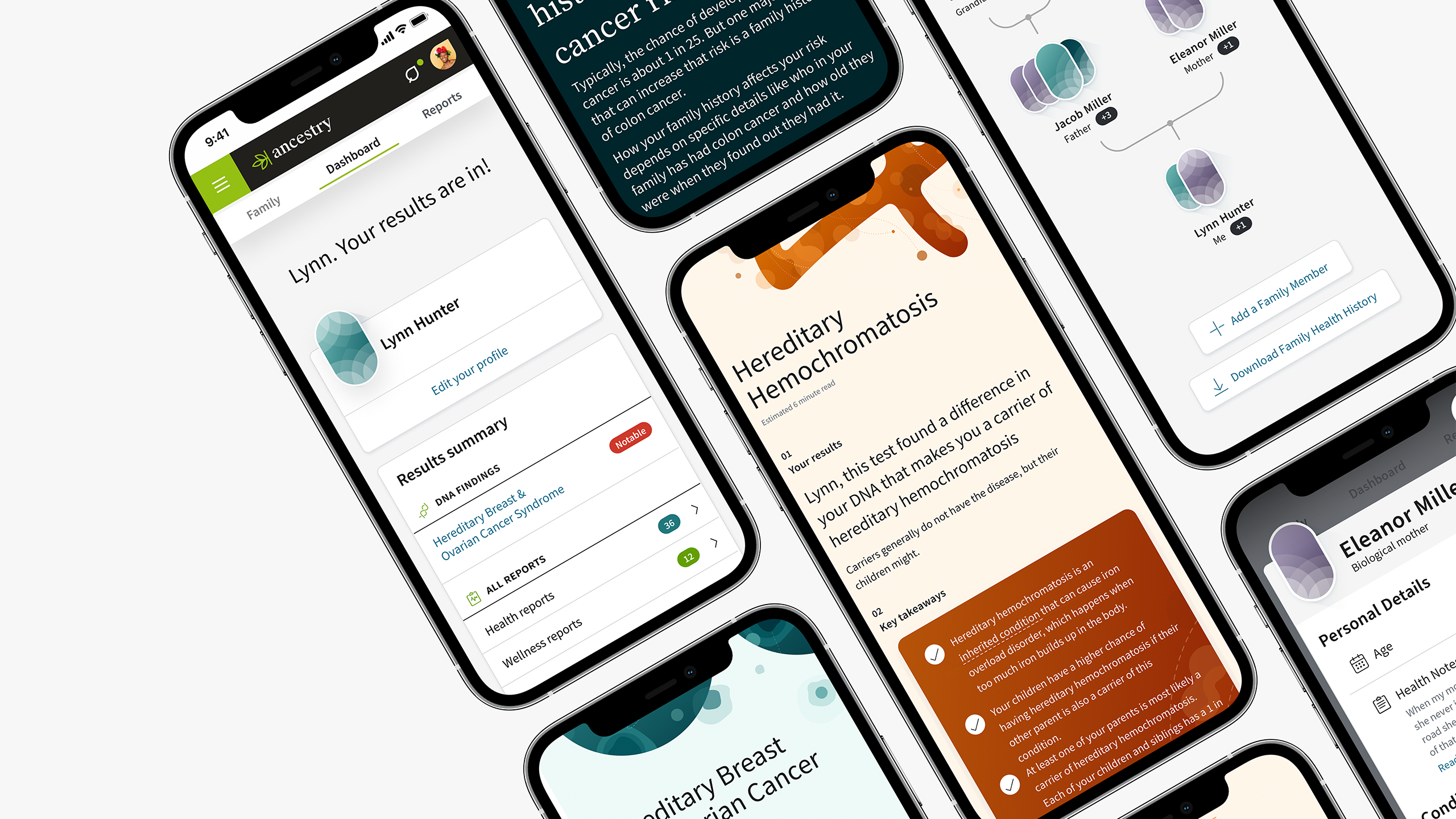
As Senior Director of Product Design, I led the content, strategy, research, and design of AncestryHealth, the company’s first new product in nearly a decade, from concept to launch in under eight months. I augmented my internal team with a few design contractors, collaborated closely with partners across PWNHealth, Quest Diagnostics, and Everlywell, and worked alongside genetic and behavioral counselors to ensure human support was built into the experience from the start.
The strategic bet that shaped everything: where competitors like 23andMe delivered data directly to consumers, AncestryHealth delivered guidance.
What the science couldn't tell us
The science tells you what’s in your DNA. It doesn’t tell you what to do about it. That was the real design problem.
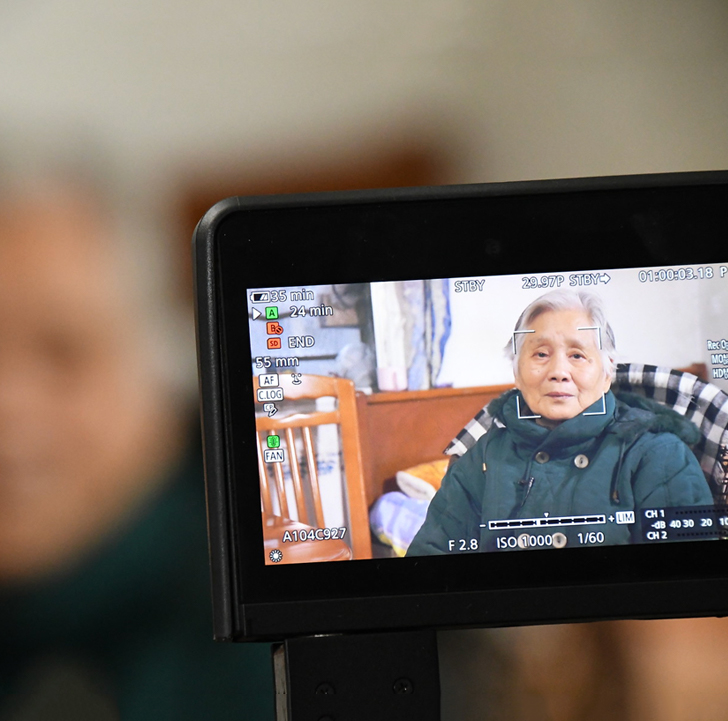
We went deep to find it. Long in-home interviews across Chicago and Nashville, inside people’s kitchens and medicine cabinets. Four behavioral patterns emerged: clinical friction that made doctor conversations difficult, information silos that kept families in the dark, an Ostrich Effect that led people to ignore alarming discoveries, and a deep need for trust and partnership in navigating it all.
The science is just the price of entry. What people do with the information is the hard part. Every design decision we made was aimed at closing that gap.
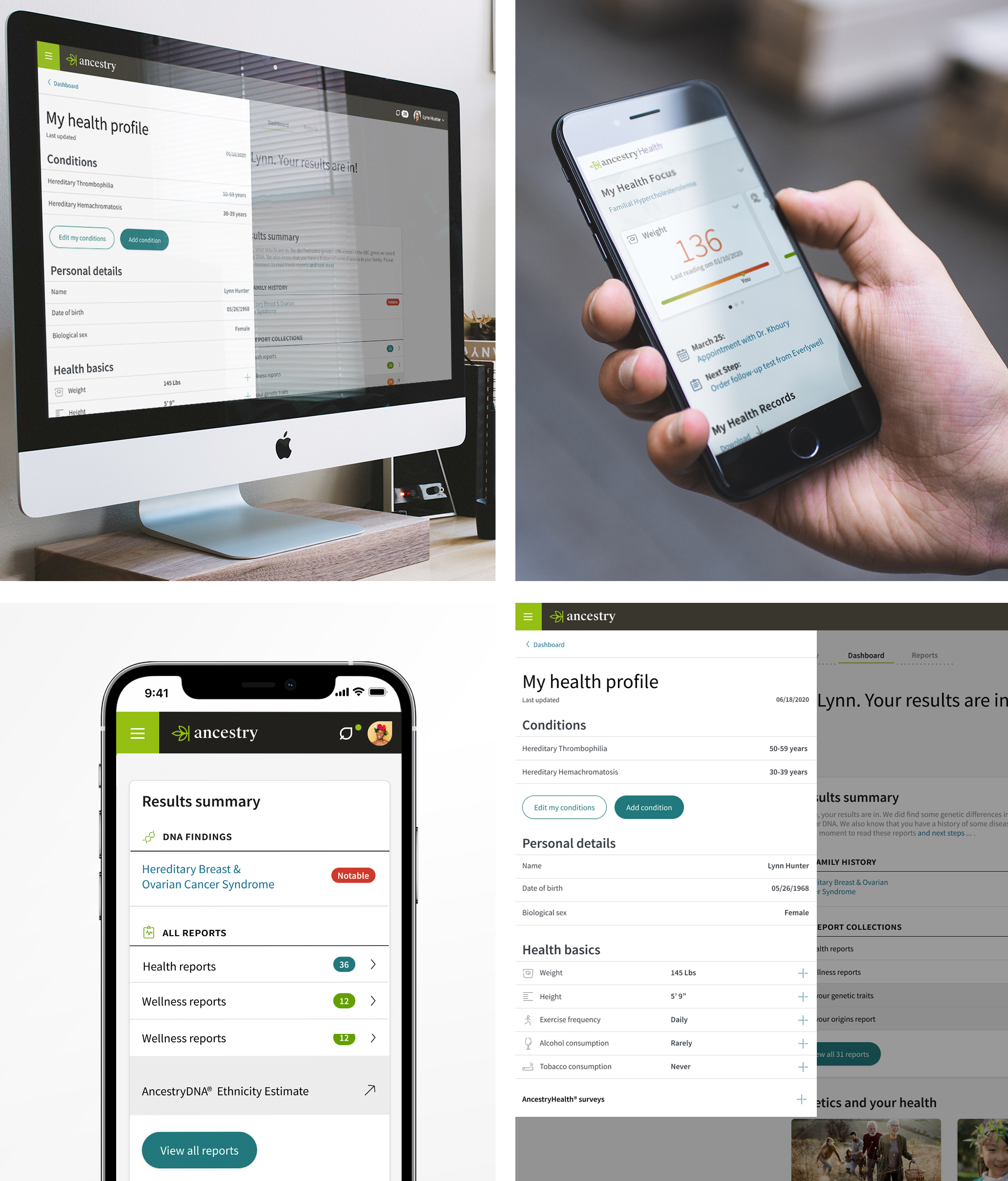
A system built for scale
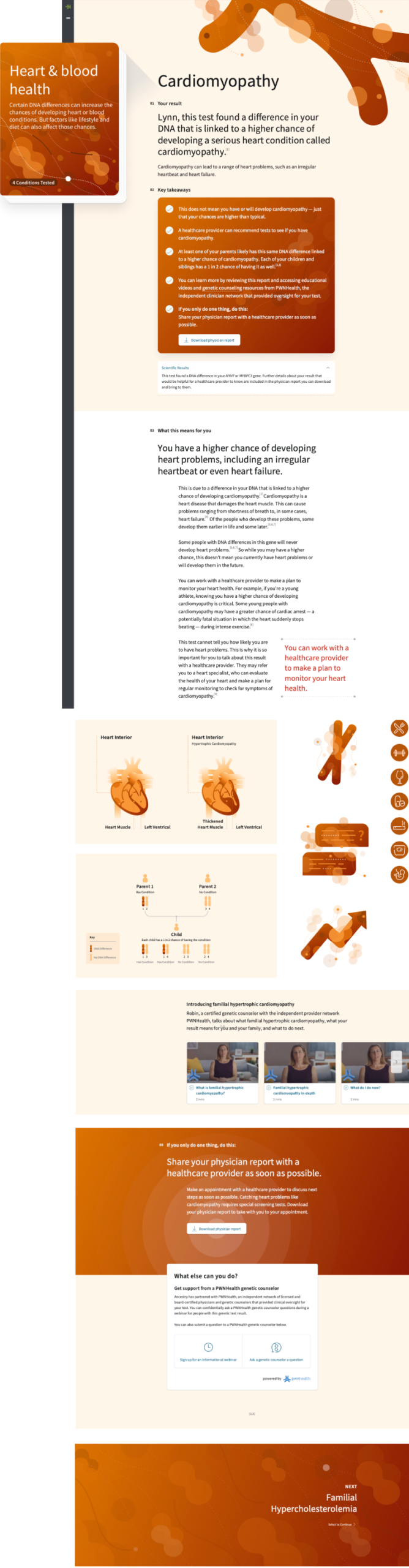
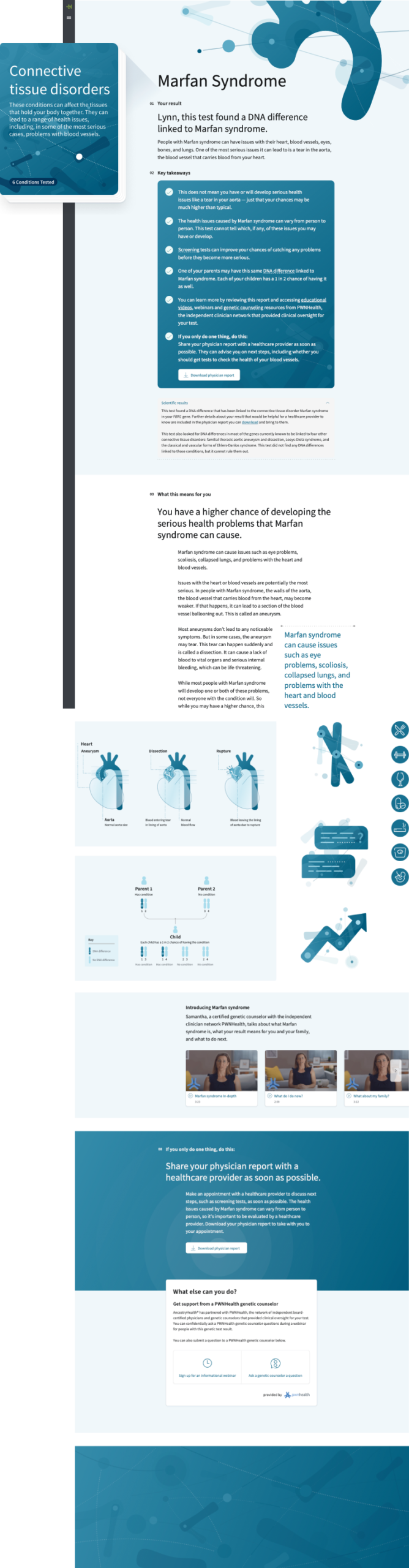
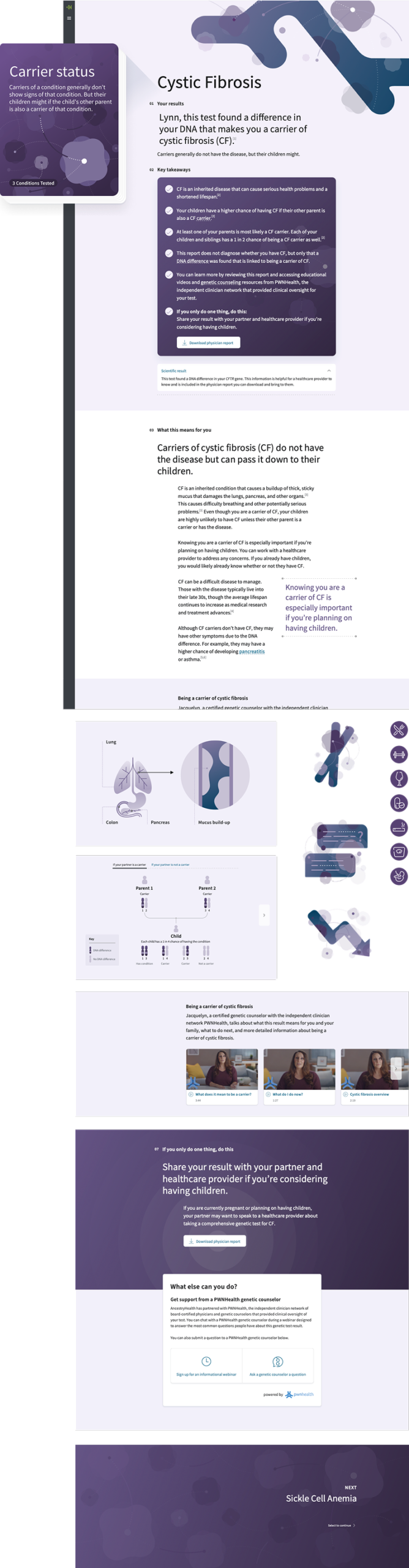
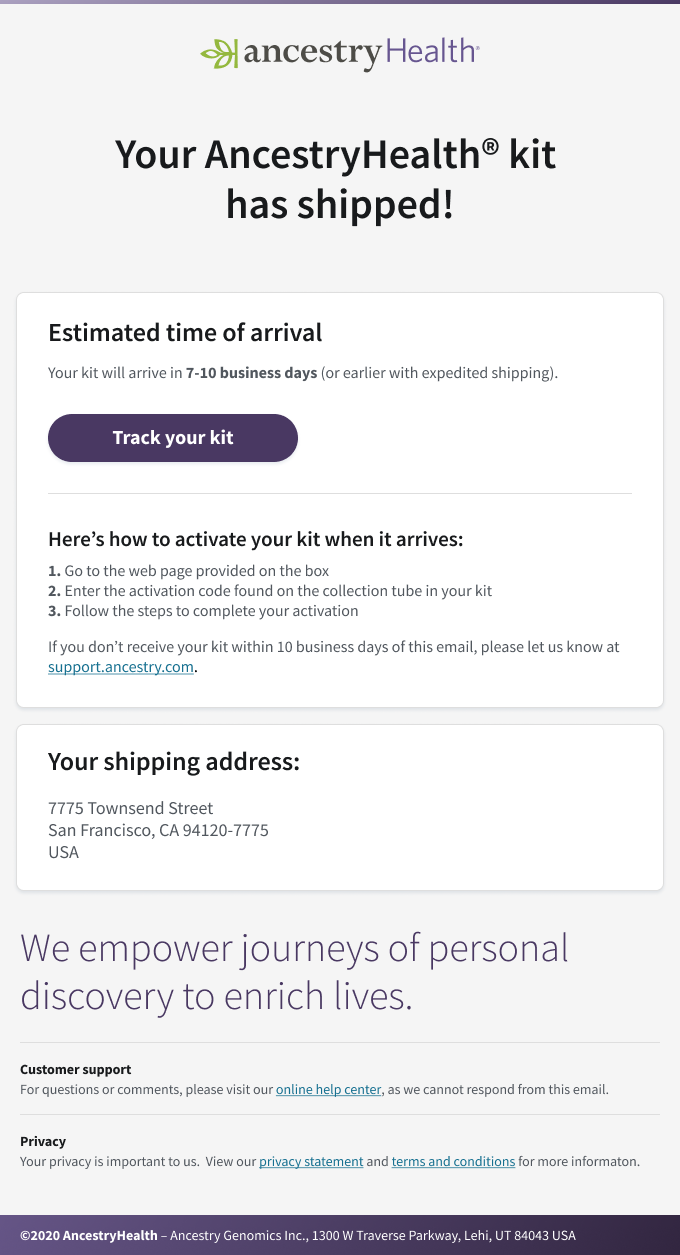
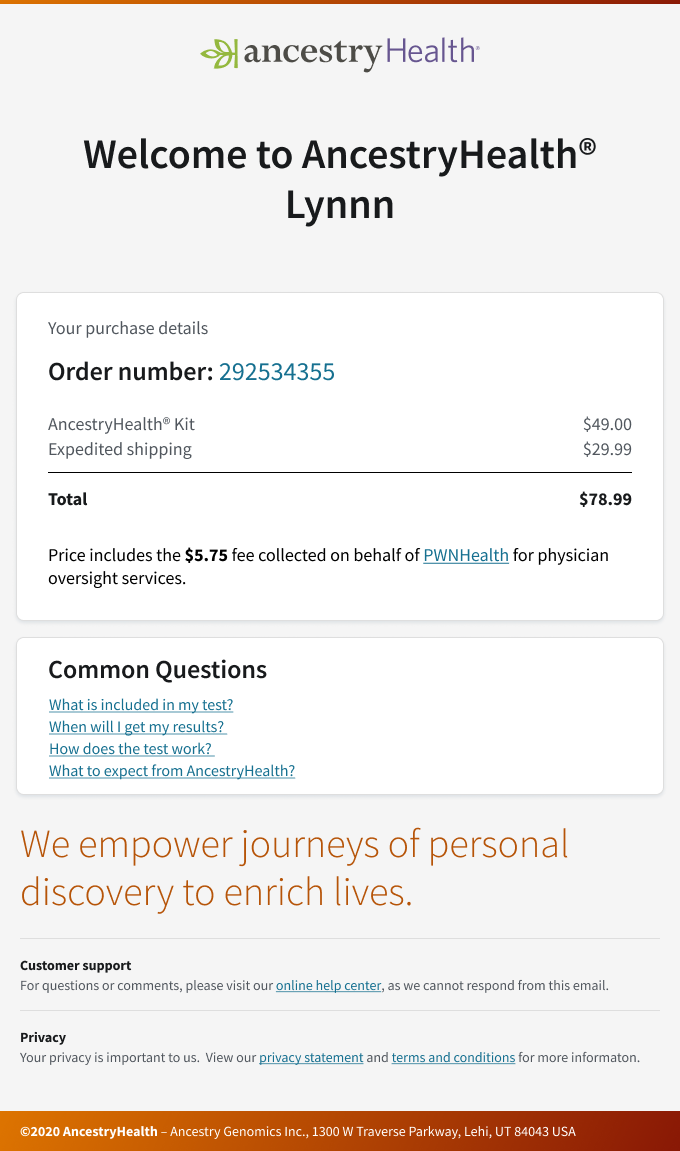
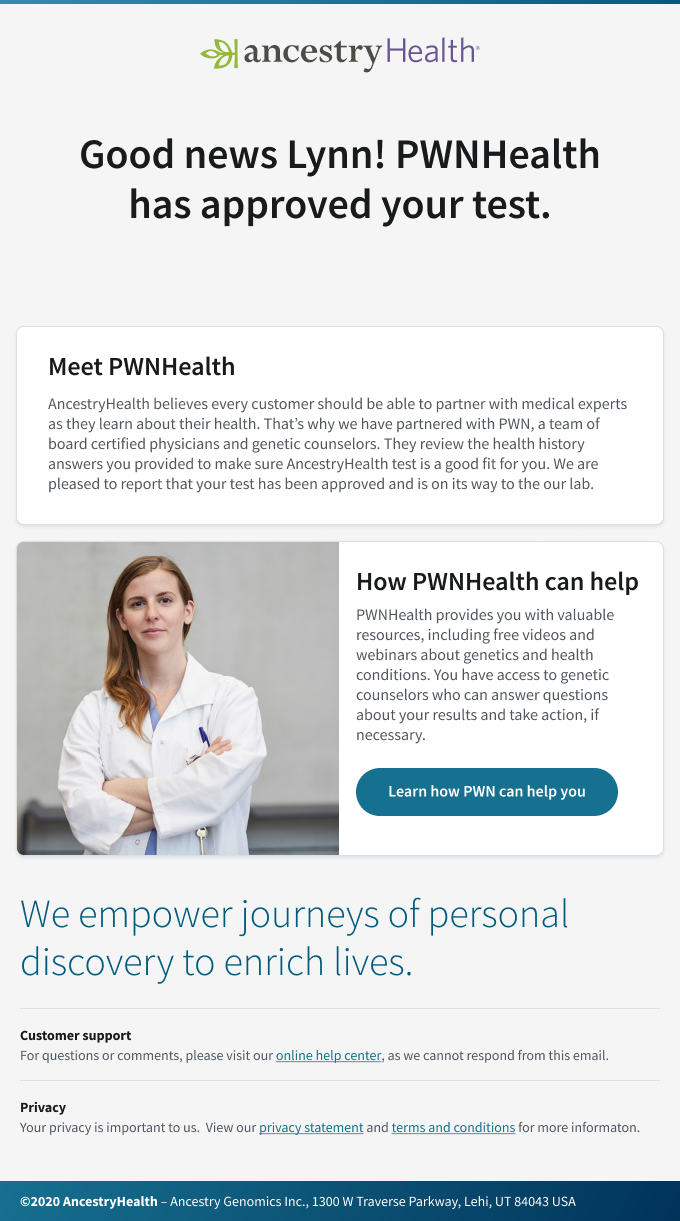
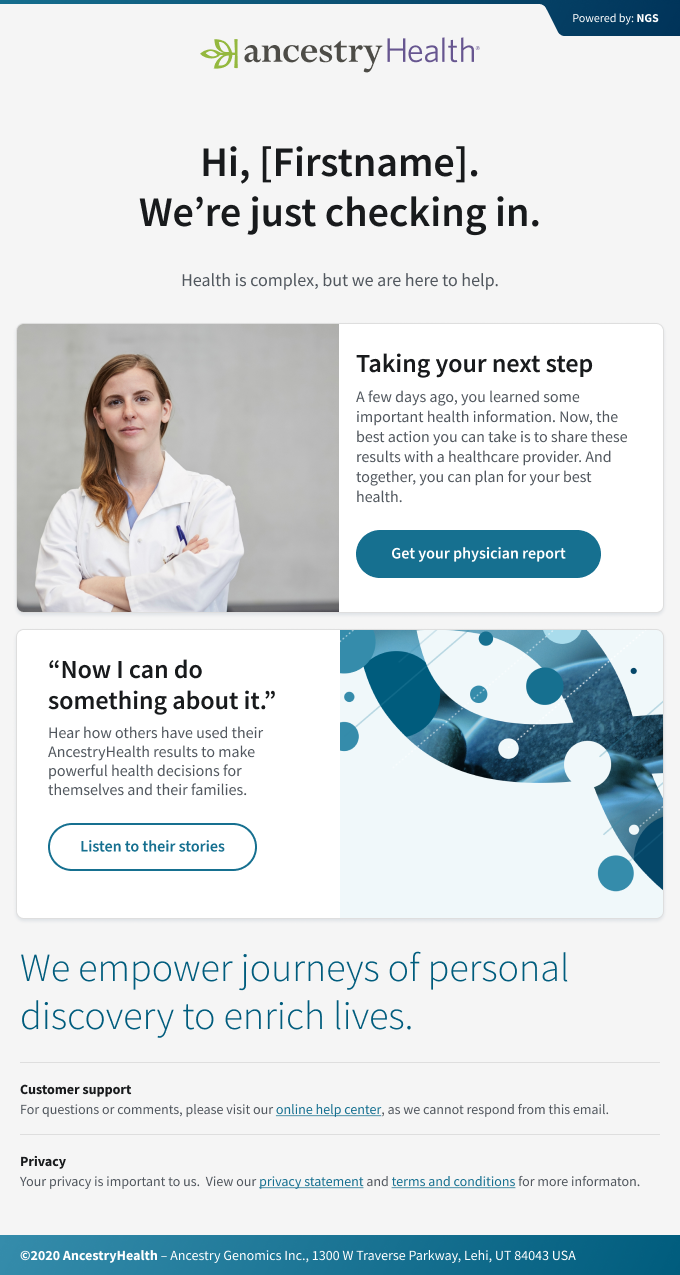
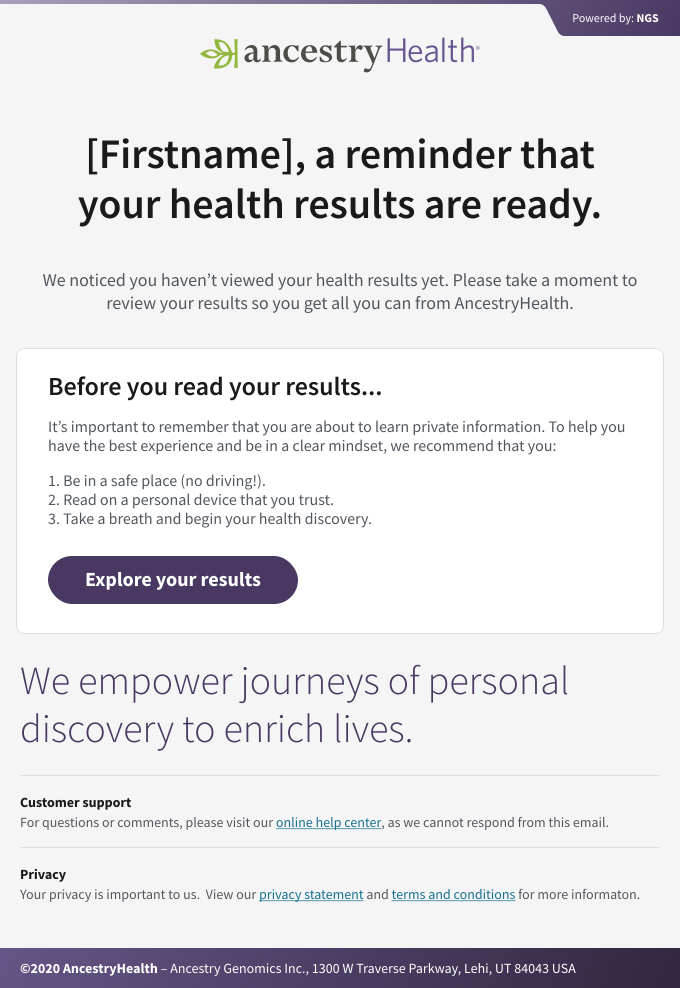
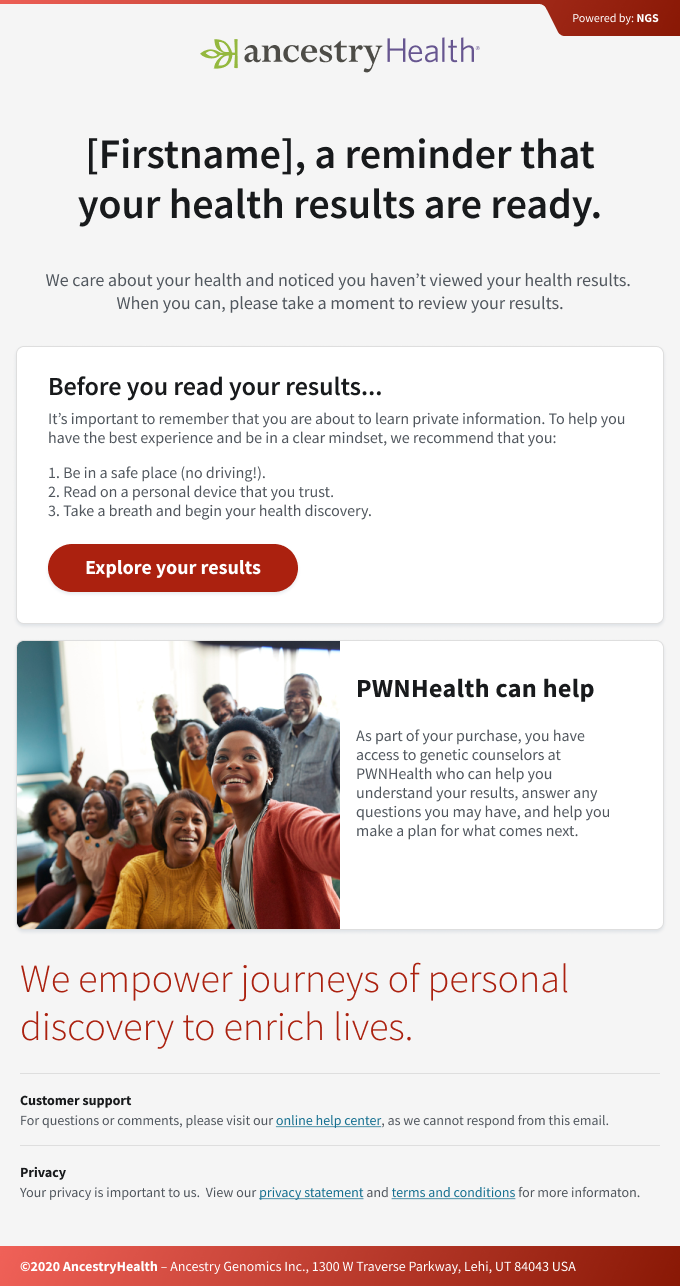
Email: Turning wait time into preparation
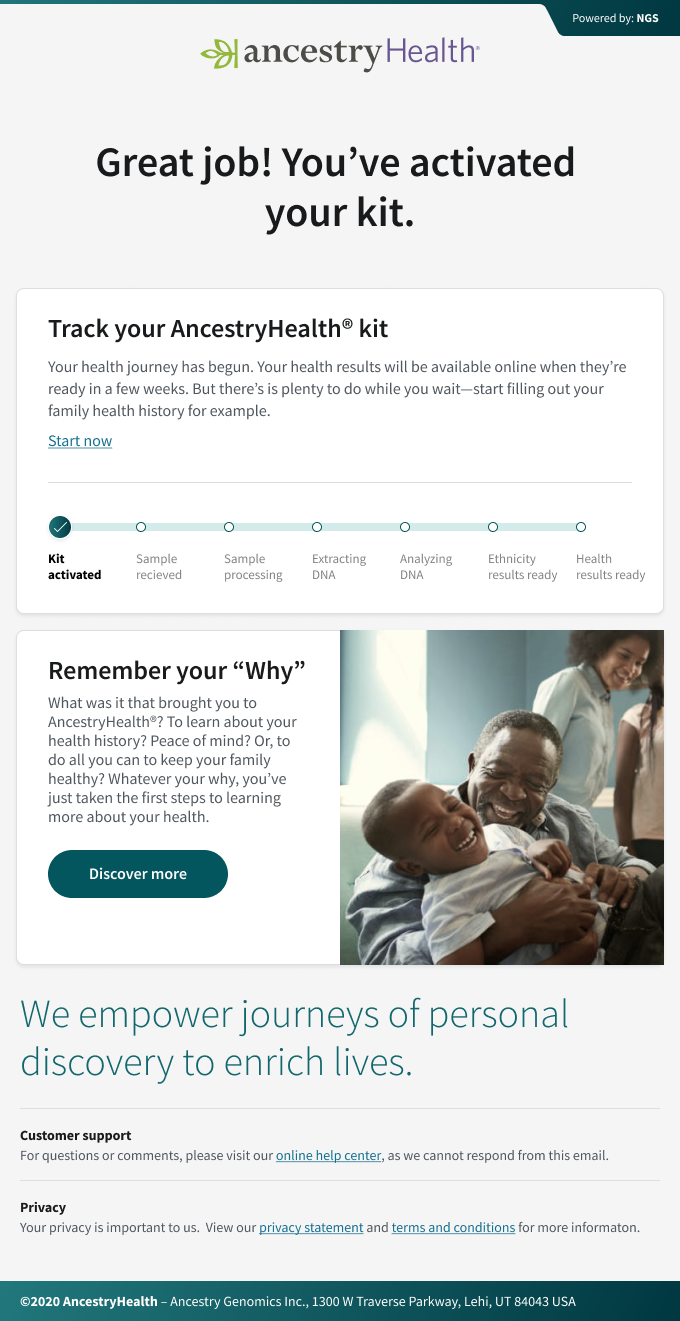
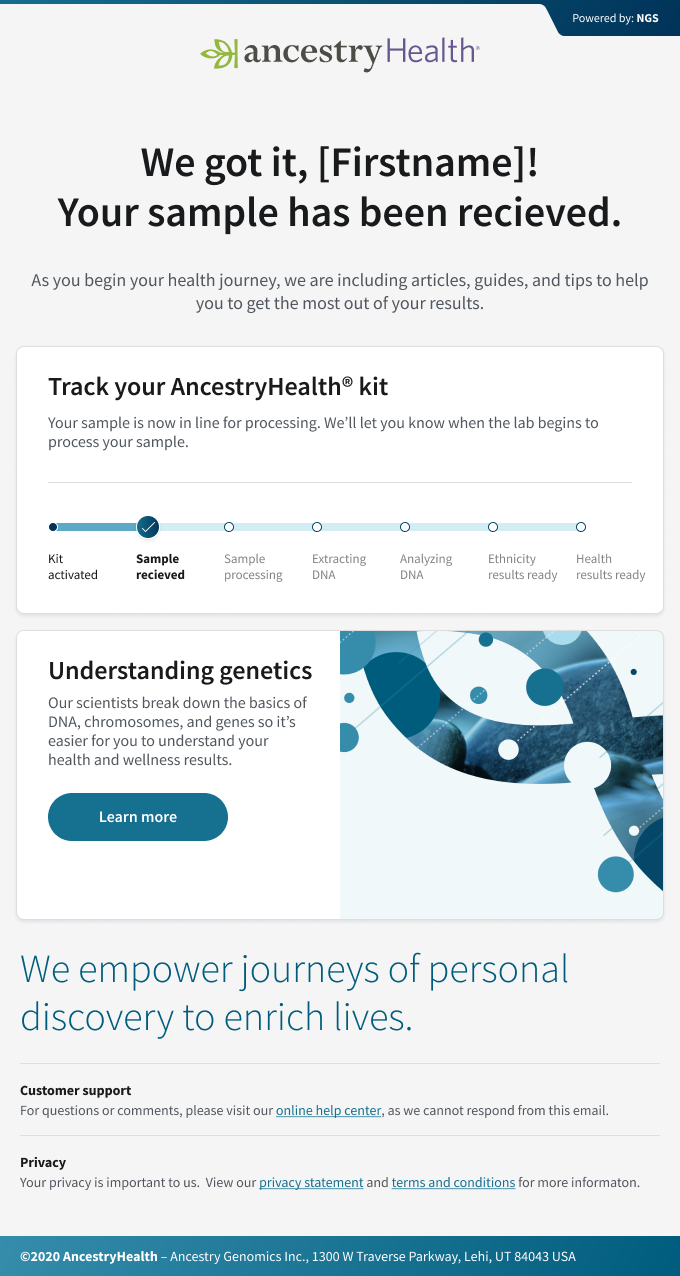
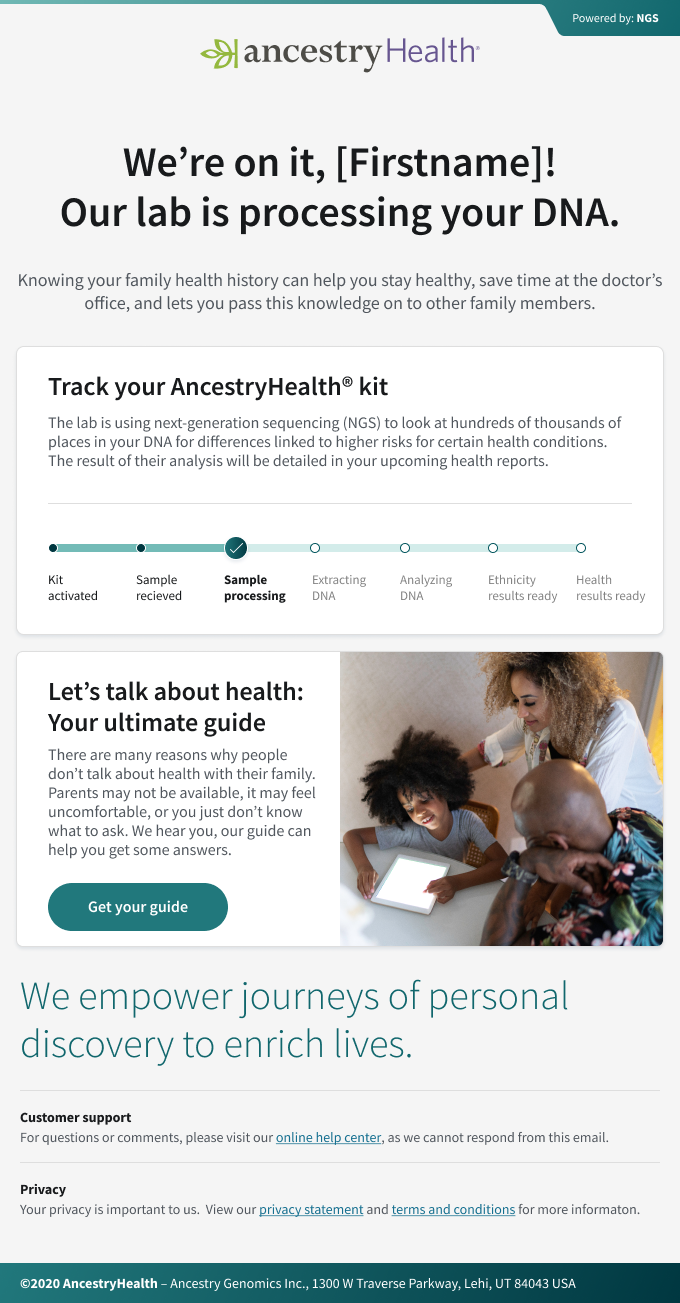
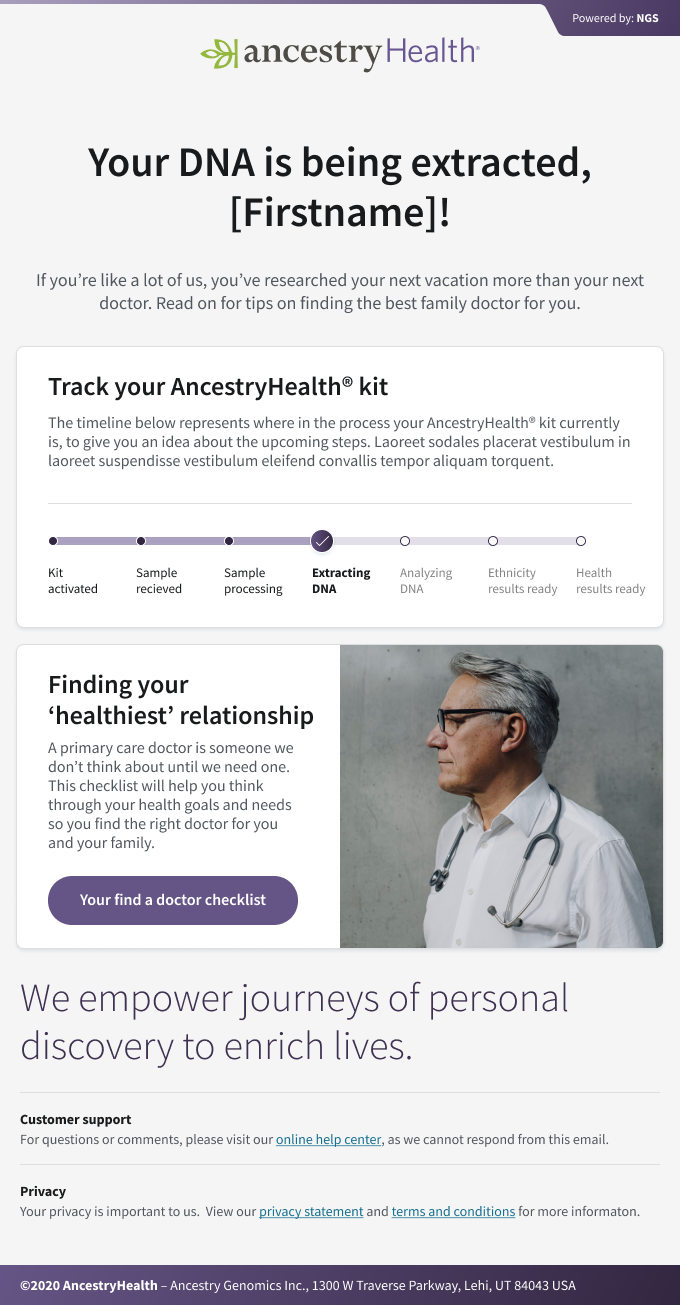
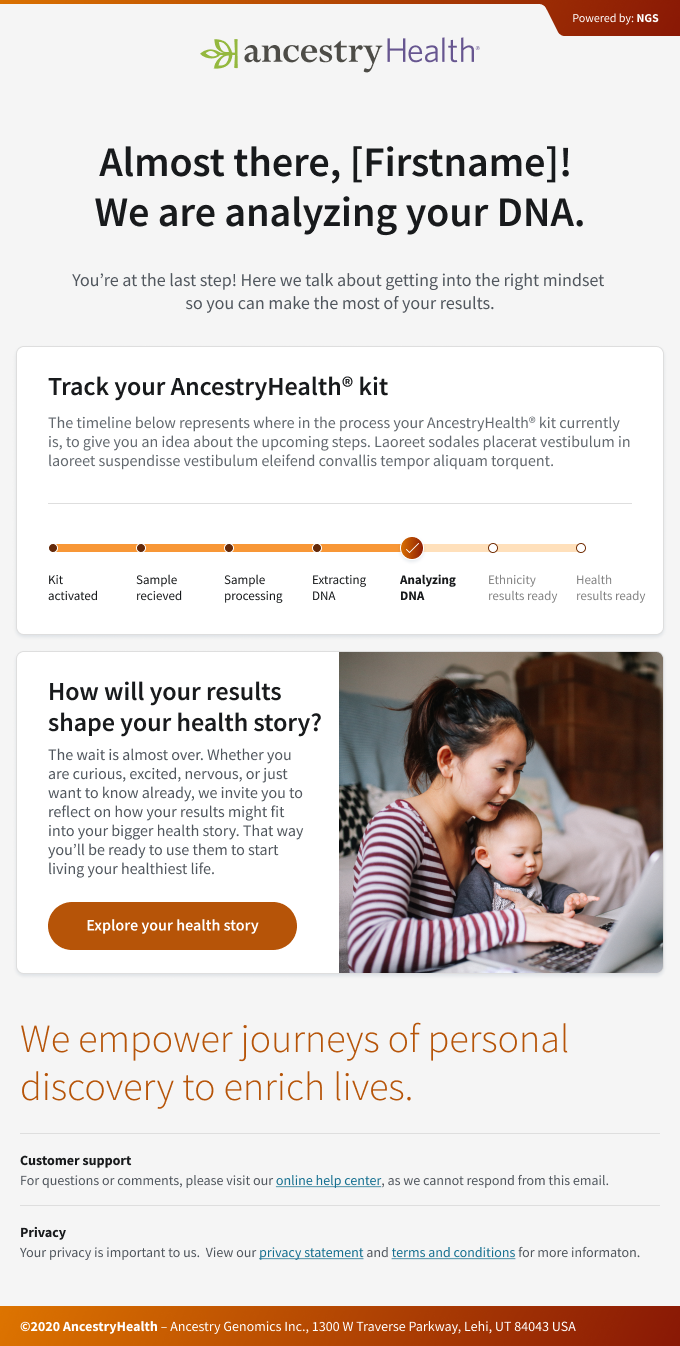
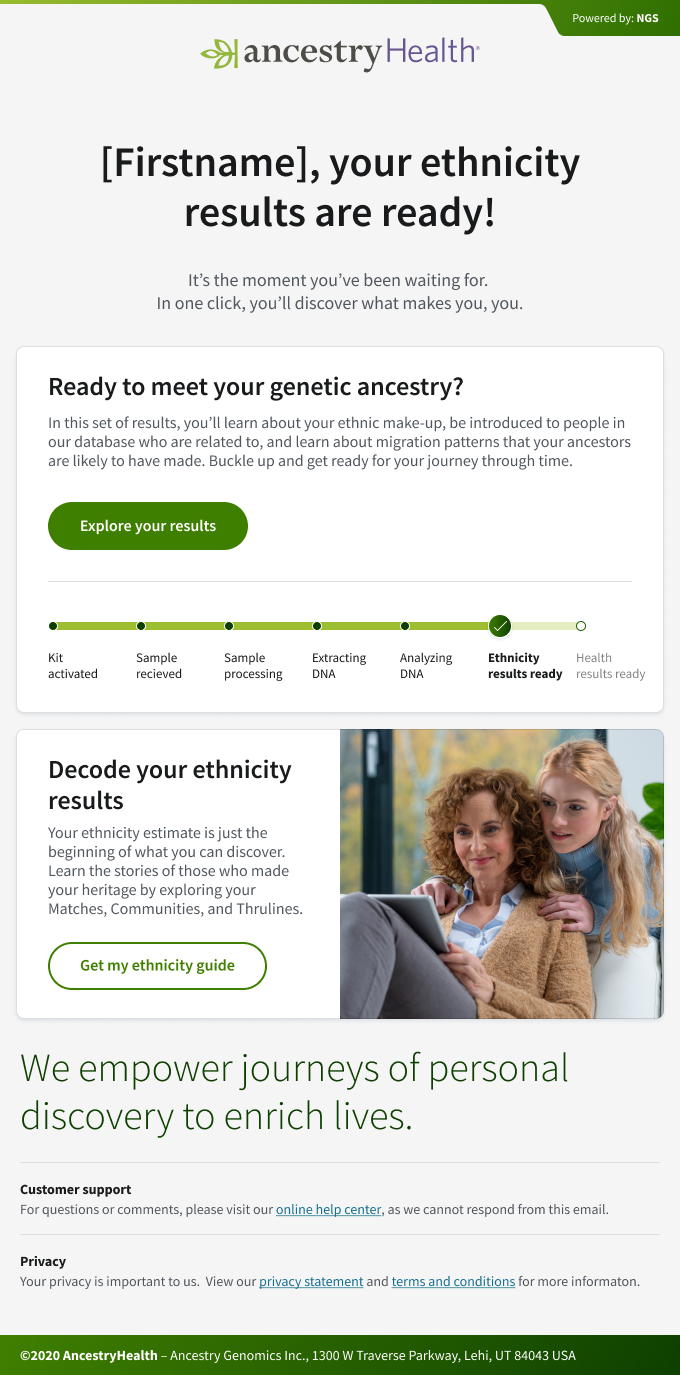
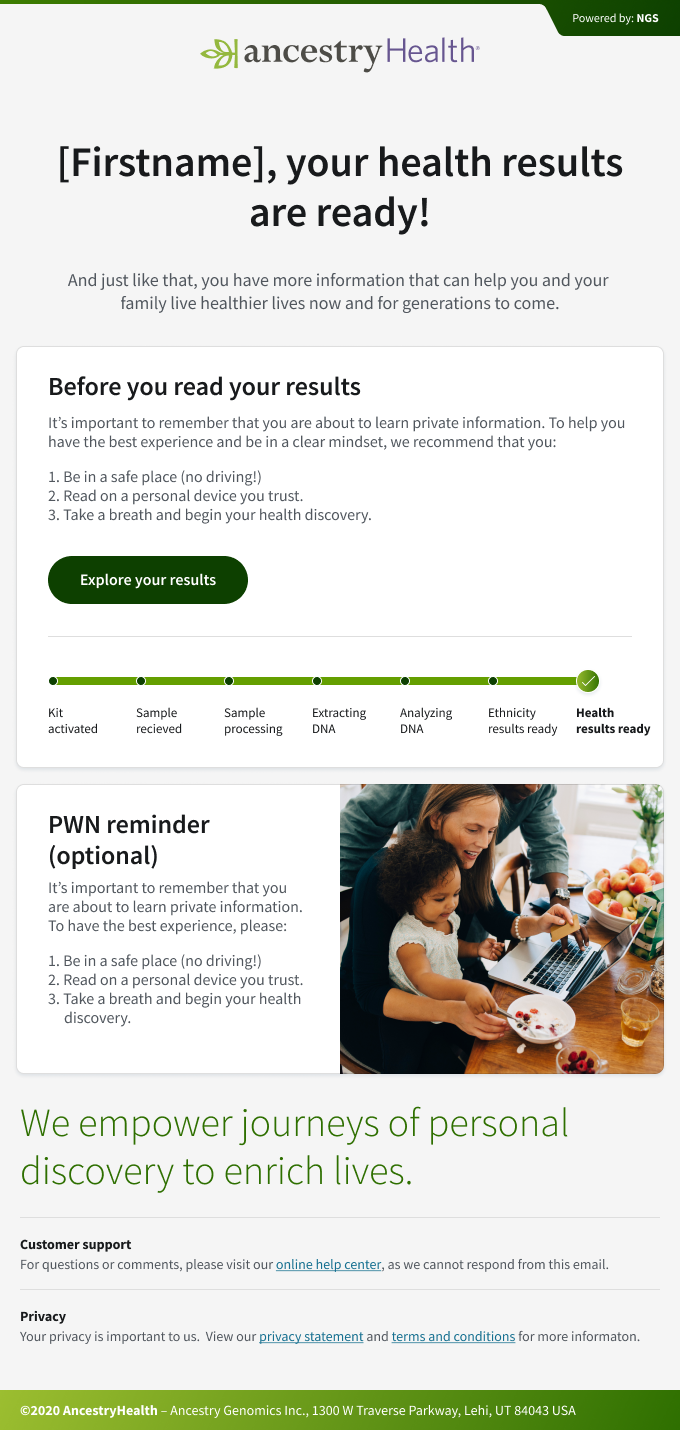
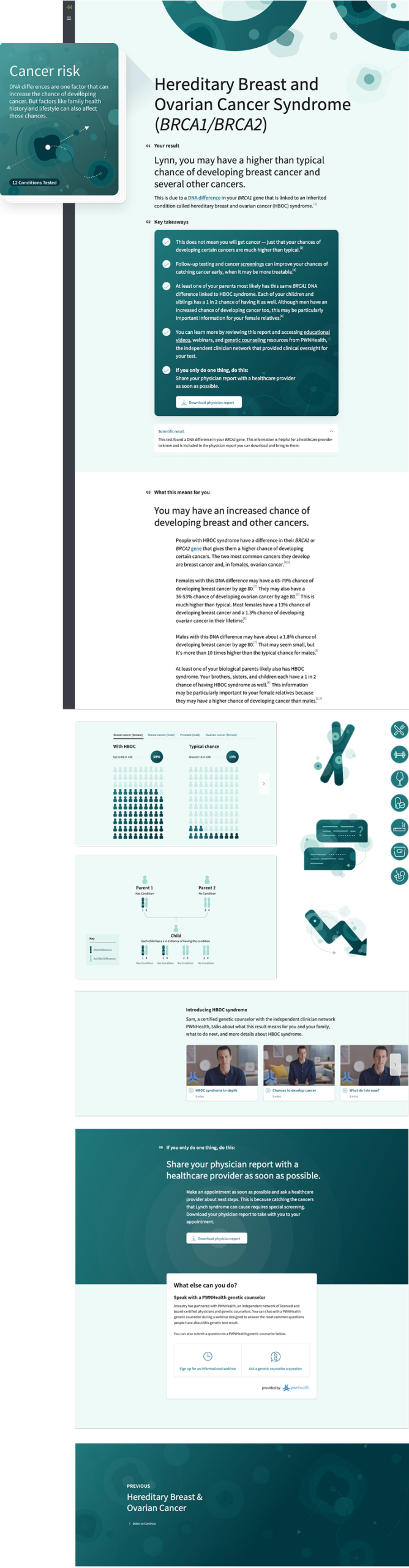
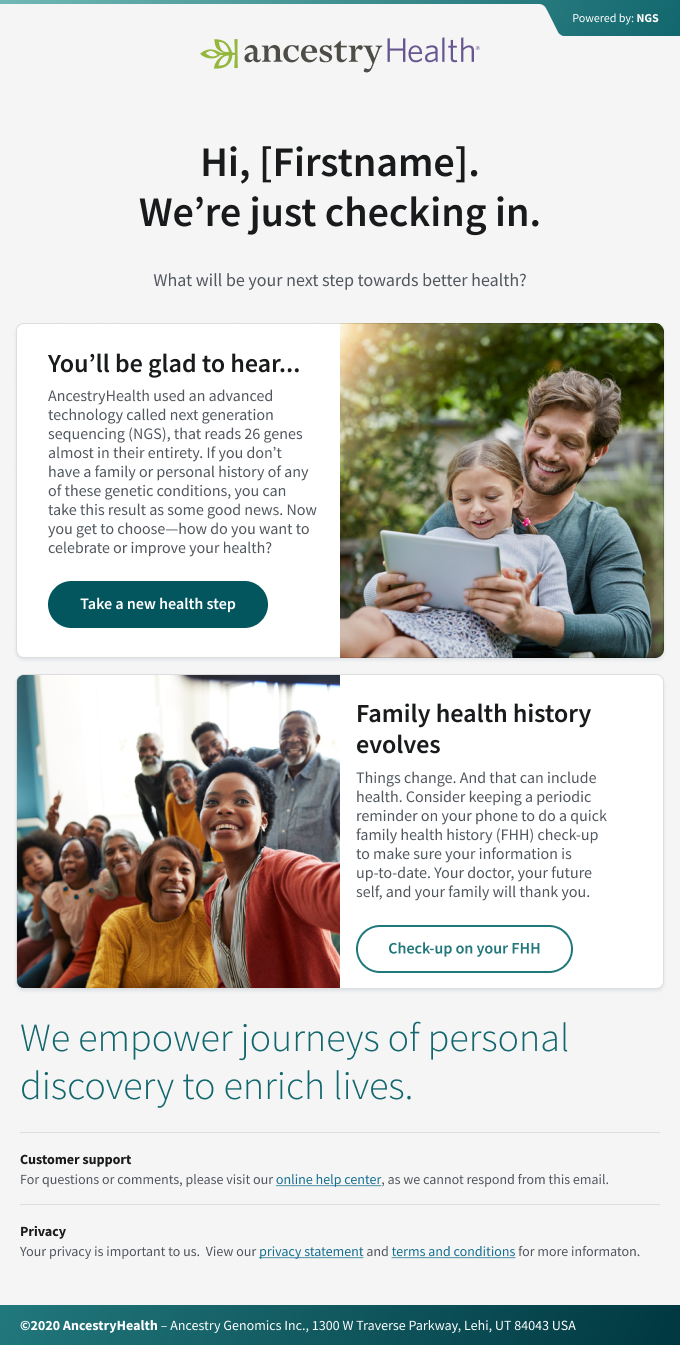
Email: Beyond the results
The product didn't survive. The proof of concept did.
AncestryHealth reached 300,000 customers in 15 months — concept to market in under eight months for a company not known for moving fast. The first affordable, physician-mediated NGS health screen widely available to consumers. A detection rate for hereditary cancer risk four times higher than standard microarray testing.
The product was discontinued in early 2021. The pandemic complicated the launch environment and Ancestry made the strategic decision to refocus investment on its core family history business. Both were the right calls at the time.
What the work proved was more durable than the product itself. The consumer genomics health space was real, the need was real, and the research that shaped the experience pointed clearly toward where the market was heading. The blueprint existed. The timing just wasn’t right.